Observing Salt Under The Microscope

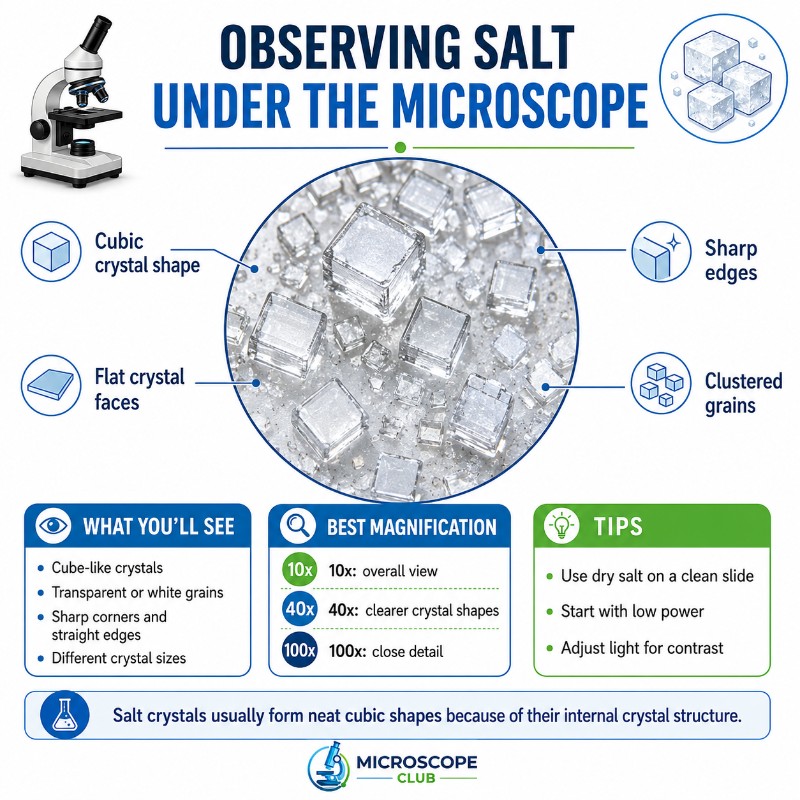
Salt under the microscope reveals something most people don’t expect: a perfectly geometric crystal, its flat faces and right-angle edges so precise they look machined rather than grown. The first time you focus on a recrystallized grain at 40x, the cubic shape is unmistakable — no soft curves, no randomness, just clean right angles repeating …
Read more

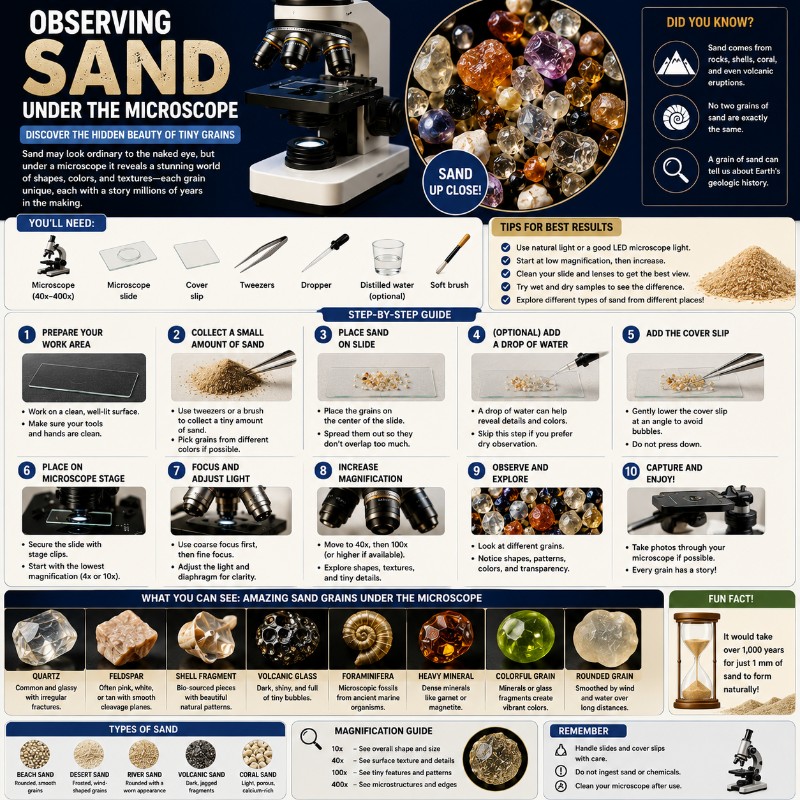
Observing Sand Under The Microscope

Sand grains under a microscope reveal more than most people expect — not just shape and color, but the entire travel history of a grain: whether it was hurled by desert winds, tumbled down a river, or built grain-by-grain from the skeletons of sea creatures. A $40 stereo scope and a pinch from your local …

Read more

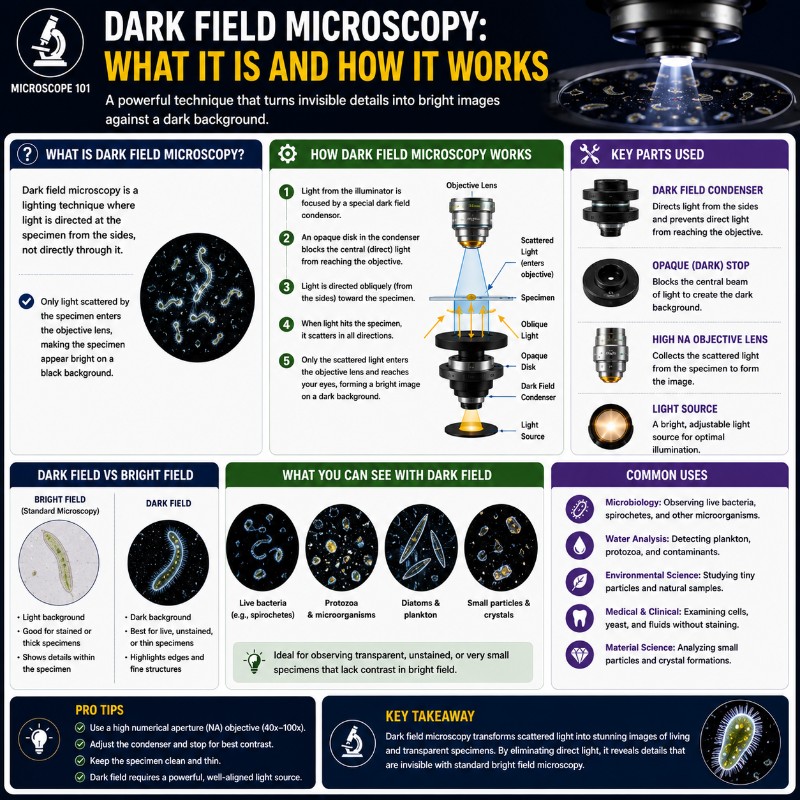
Dark Field Microscopy: What it is And How it Works

Photo of Dark Field Microscopy: What it is And How it Works

Dark field microscopy illuminates a specimen with a hollow cone of oblique light so that only the light scattered or diffracted by the specimen reaches the objective — leaving everything else in pitch-black. That simple optical trick turns colourless, unstained, and nearly transparent specimens into bright glowing structures you simply cannot see under conventional bright …

Read more

Observing Yeast Under The Microscope

Observing Yeast Under The Microscope

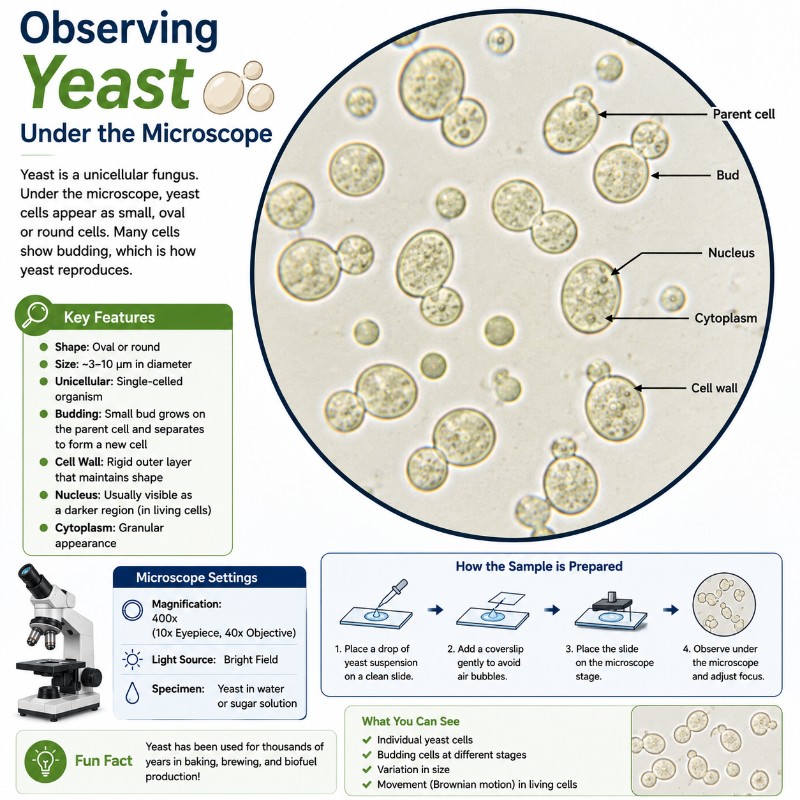
Yeast under a microscope reveals a world far more dynamic than the plain beige powder from a baking packet suggests. At 400x magnification you can watch living cells bud off daughter cells in real time — and a single drop of methylene blue tells you in seconds which cells are alive and which are dead. …

Read more

How to Prepare Microscope Slides: A Step by Step Guide

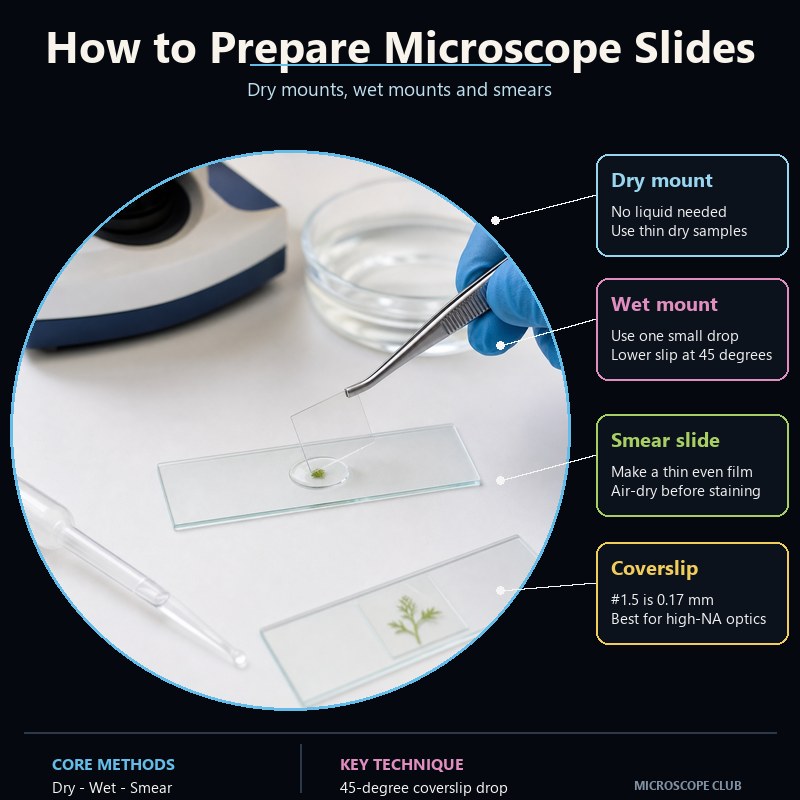
Microscope slide preparation showing a coverslip lowered at 45 degrees over a wet-mount specimen

Preparing a microscope slide correctly is the step most beginners skip — and then wonder why everything looks blurry, speckled, or flat. The three core techniques (dry mount, wet mount, and smear) each have one or two decisions that make or break the result, and getting them right turns a muddy image into a sharp, …

Read more

Bright field Microscope: Facts and FAQs

Photo of Bright field Microscope: Facts and FAQs

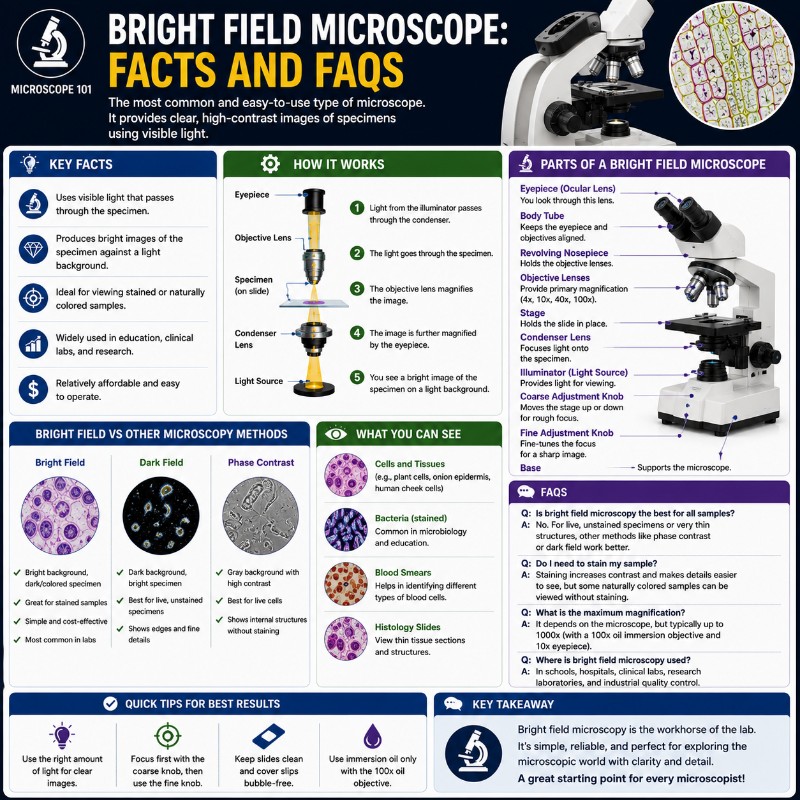
You might be wondering what a brightfield microscope is, but chances are, you have already seen one- more specifically, a compound light microscope. The thing is, brightfield microscopes are really common and can be found in just about any lab and science classroom. These microscopes operate through a basic form of optical microscopy, and are …

Read more

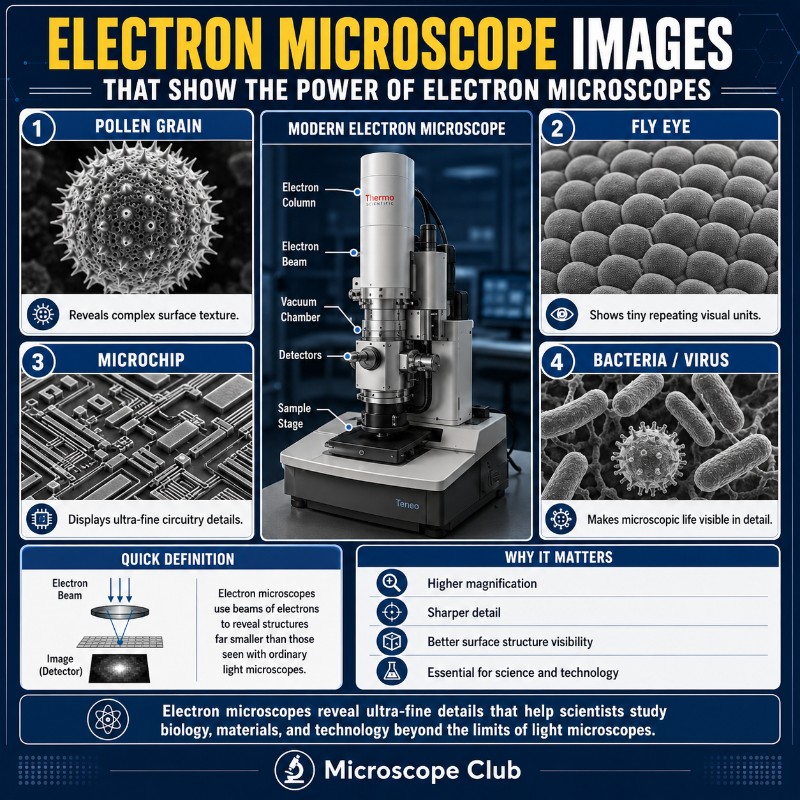
Electron Microscope Images That Show The Power of Electron Microscopes

Photo of Electron Microscope Images That Show The Power of Electron Microscopes

Electron microscope images reveal a world that visible light can never reach — individual atoms, flash-frozen viral proteins, and the claw of a mite clinging to a honeybee’s back. This guide explains how electron microscopes produce those images, what the color and scale bars actually mean, and how to read every picture in the gallery …

Read more

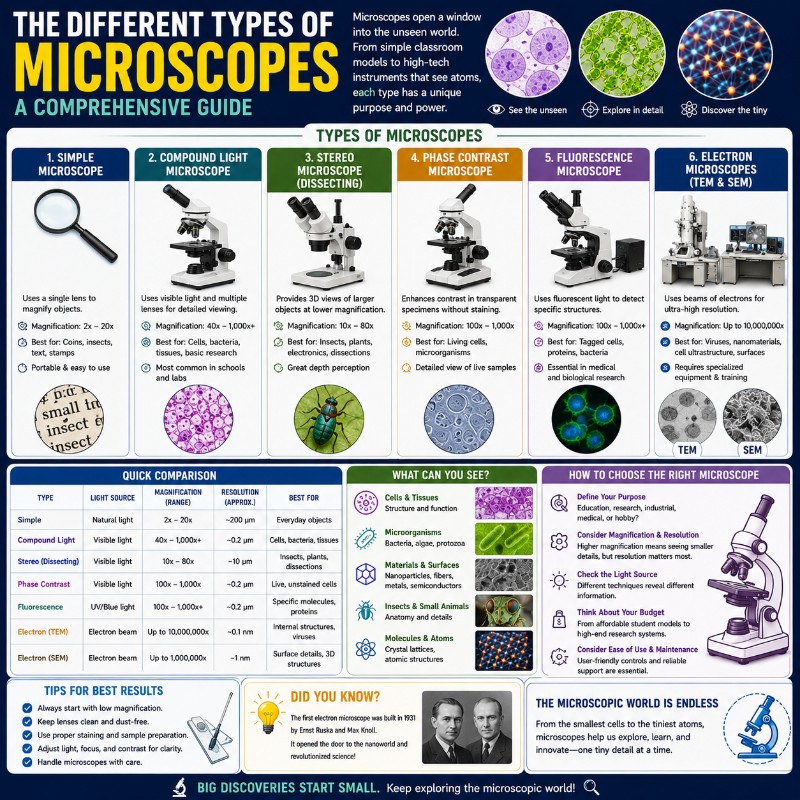
The Different Types of Microscopes – A Comprehensive Guide

Photo of The Different Types of Microscopes

Most people picture a compound microscope the moment the word comes up — the upright tube and a rack of objectives that defined every middle school science class. But that single image barely scratches the surface: there are dozens of microscope types in regular use today, from handheld USB devices a kid can run off …

Read more

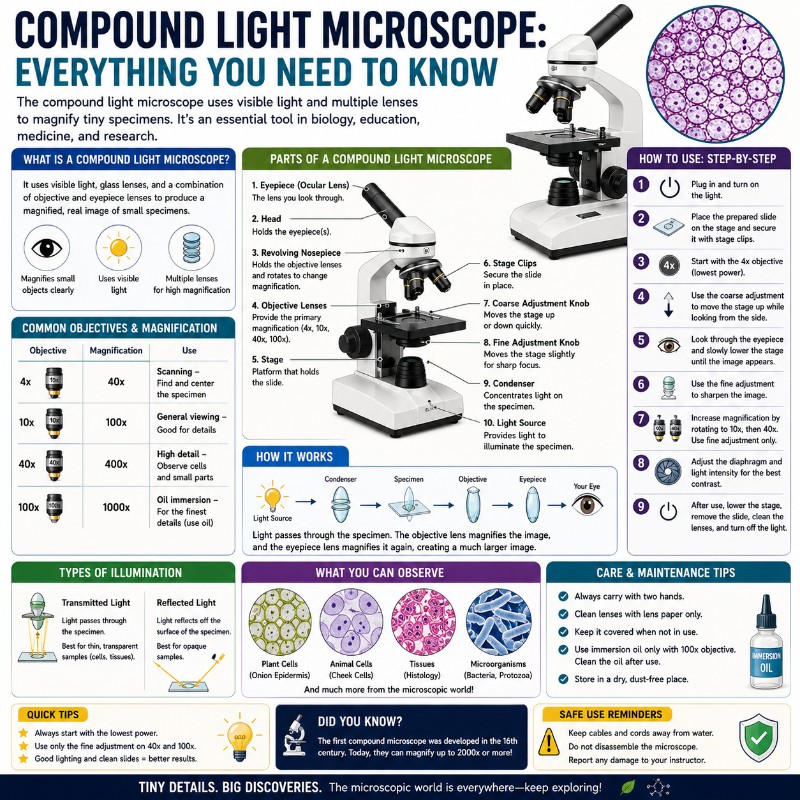
Compound Light Microscope: Everything You Need to Know

Photo of Compound Light Microscope

Pick up any compound light microscope, flip on the LED, and within a minute you’re watching a single drop of pond water teeming with organisms you can’t see with your naked eye. That’s the appeal — straightforward enough to use at a kitchen table, powerful enough for serious biology, and affordable enough that millions of …

Read more

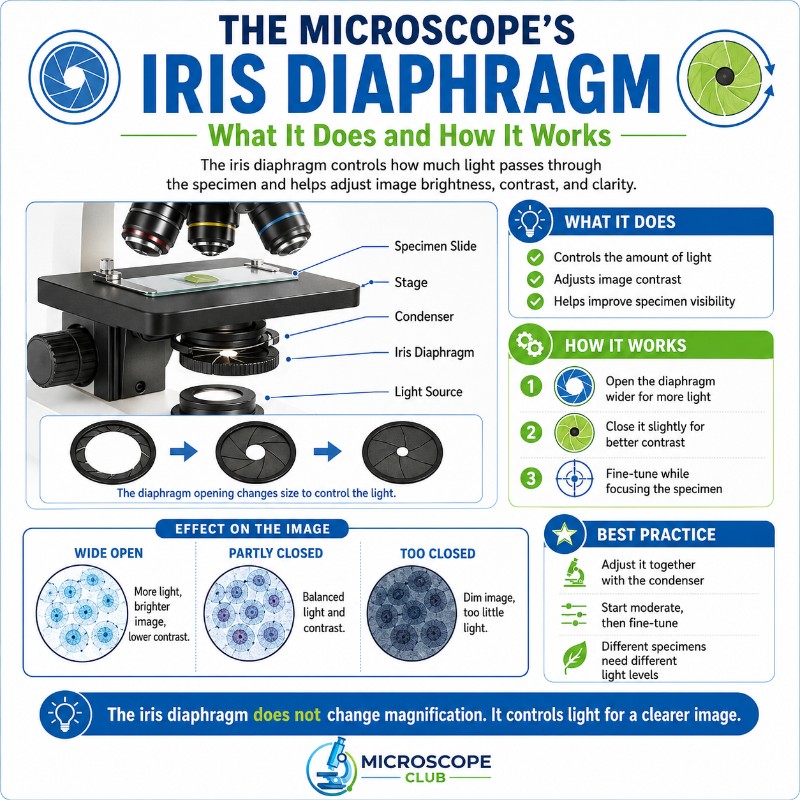
The Microscope’s Iris Diaphragm: What it Does And How it Works

Photo of The Microscope’s Iris Diaphragm_ What it Does And How it Works

The iris diaphragm is one of the most frequently misused controls on a light microscope — and one of the most powerful when you know what it actually does. It sits inside the substage condenser, governs the cone of light that strikes your specimen, and directly determines the balance between contrast, resolution, and depth of …

Read more