Fluorescence vs Confocal Microscope: 7 Key Differences
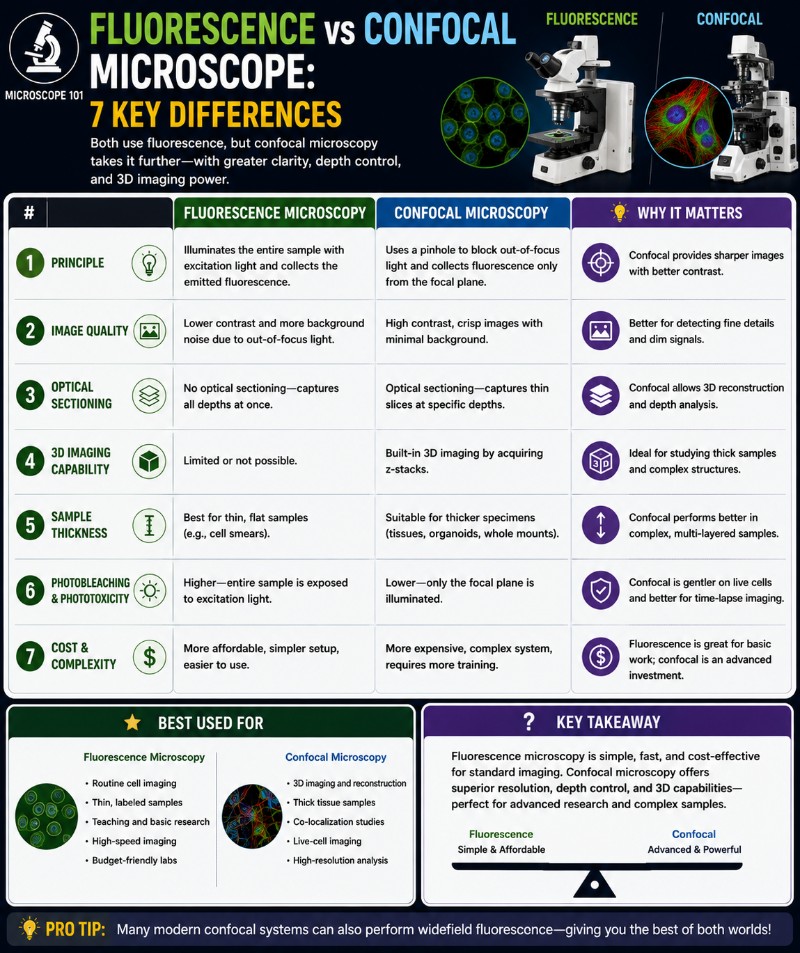
Photo of Fluorescence vs Confocal Microscope: 7 Key Differences

Fluorescence vs confocal microscope is one of the most common points of confusion in biological imaging — and the answer surprises most people: a confocal microscope is a fluorescence microscope. The difference is a single component, a tiny pinhole aperture, that blocks out-of-focus light and lets confocal produce sharp optical sections through thick samples. Widefield …
Read more

Observing Yogurt Under a Microscope: Bacteria You’ll See

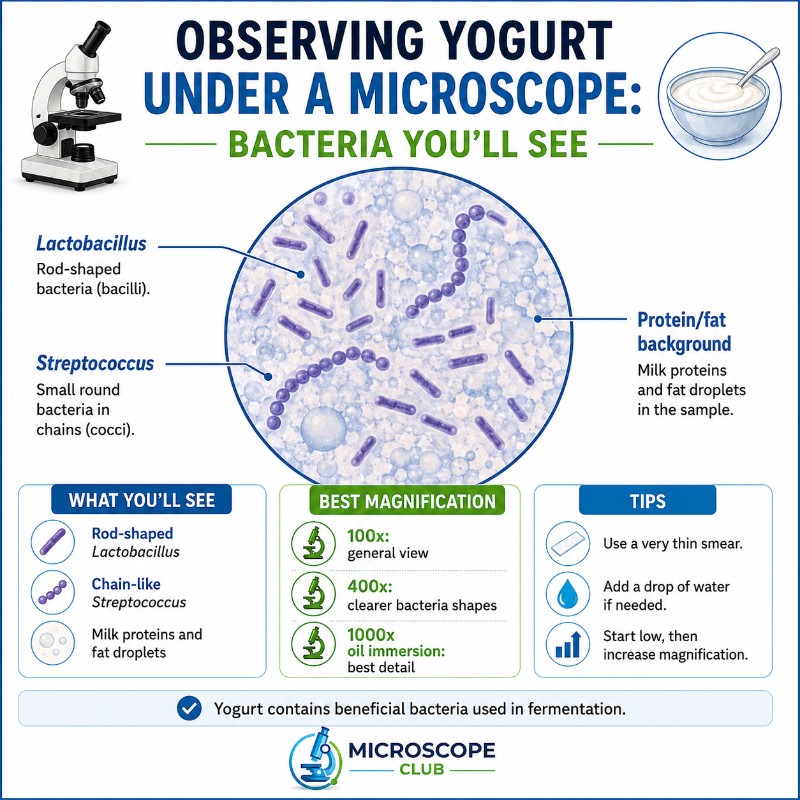
Photo of Observing Yogurt Under a Microscope_ Bacteria You'll See

Observing yogurt under a microscope reveals two types of live bacteria — rod-shaped Lactobacillus and bead-like chains of Streptococcus — but you need about 1000x magnification with oil immersion and a simple stain to see them clearly. At 400x they appear as faint dark specks, enough to confirm they’re there; at 1000x you can distinguish …

Read more

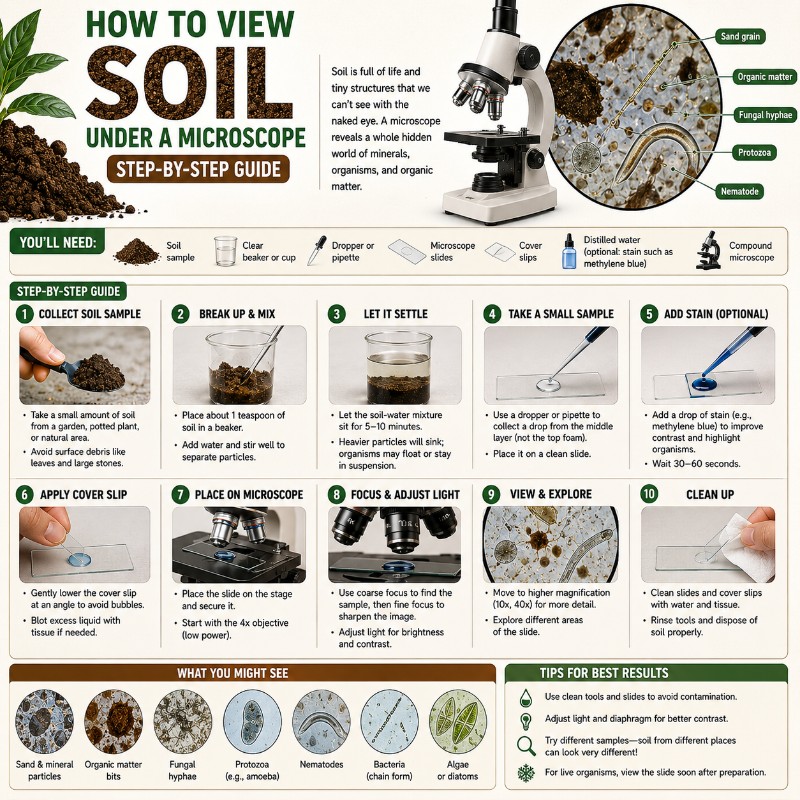
How to View Soil Under a Microscope (Step-by-Step)

Photo of How to View Soil Under a Microscope (Step-by-Step)

Learning how to view soil under a microscope comes down to five steps: collect a fresh sample from the top 2–4 inches of ground, disperse a small amount in distilled water, pipette a drop of the cloudy liquid onto a slide, add a coverslip, and scan from low to high magnification. Done right, you’ll find …

Read more

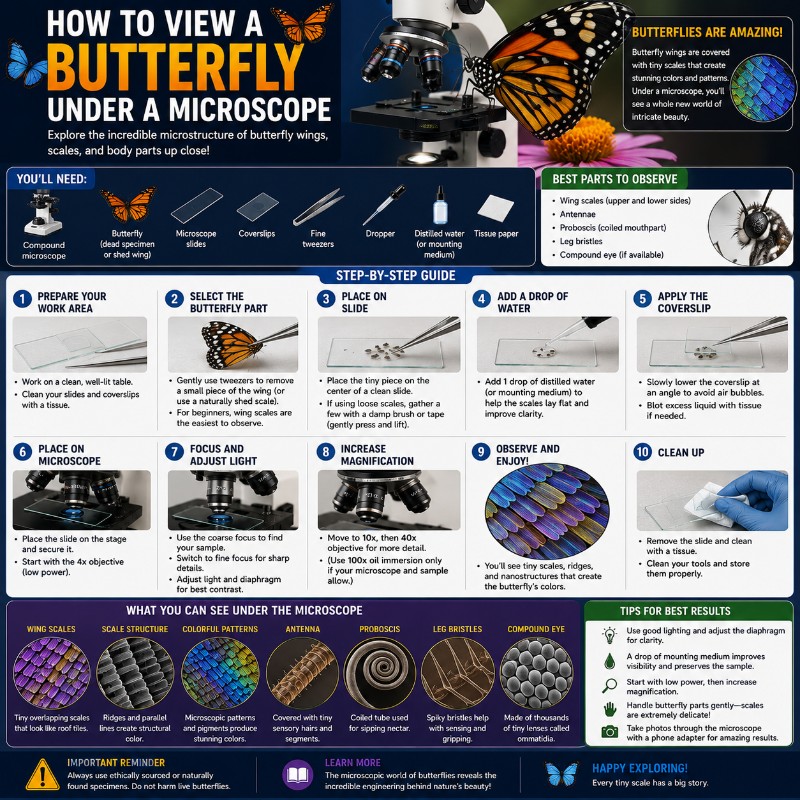
How to View a Butterfly Under a Microscope

Photo of Butterfly under microscope

Knowing how to view a butterfly under a microscope opens up one of the most visually stunning specimens in amateur microscopy. Use a stereo (dissecting) microscope at 10–40x for whole structures like wings, the proboscis, compound eyes, and antennae, and switch to a compound microscope at 40–400x when you want to resolve individual wing-scale ridges …

Read more

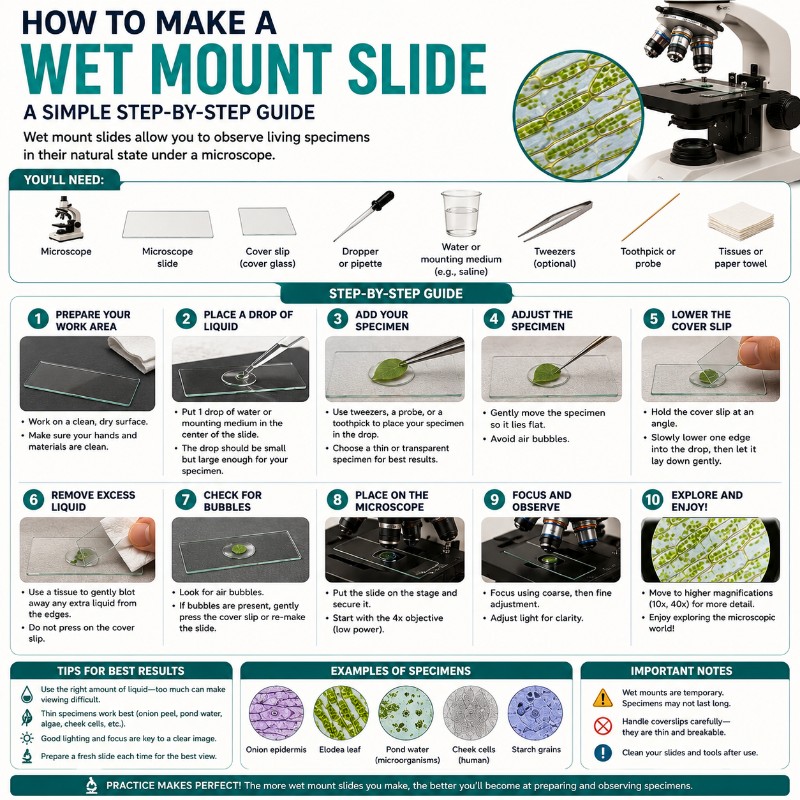
How to Make a Wet Mount Slide (Step-by-Step)

Photo of How to Make a Wet Mount Slide (Step-by-Step)

A wet mount slide suspends a specimen in a drop of liquid between a glass slide and a coverslip — the fastest and most beginner-friendly way to observe living specimens under a compound microscope. Here are the six steps at a glance: Clean your glass slide and coverslip. Place your specimen on the center of …

Read more

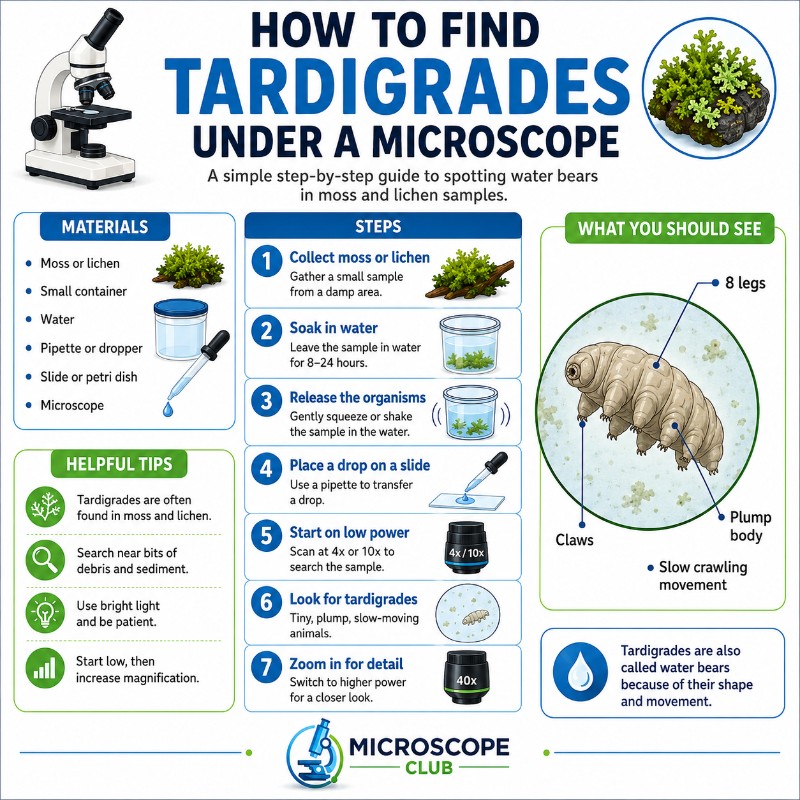
How to Find Tardigrades Under a Microscope

Photo of How to Find Tardigrades Under a Microscope

Tardigrades — also called water bears — are microscopic eight-legged animals that hide inside dry moss and lichen, waiting to be rehydrated. With a basic microscope and a handful of dry moss, you can find them yourself; the method is simpler than most people expect, and the steps below cover everything you need to get …

Read more

Blood Smear Under a Microscope: How to Read One Step by Step

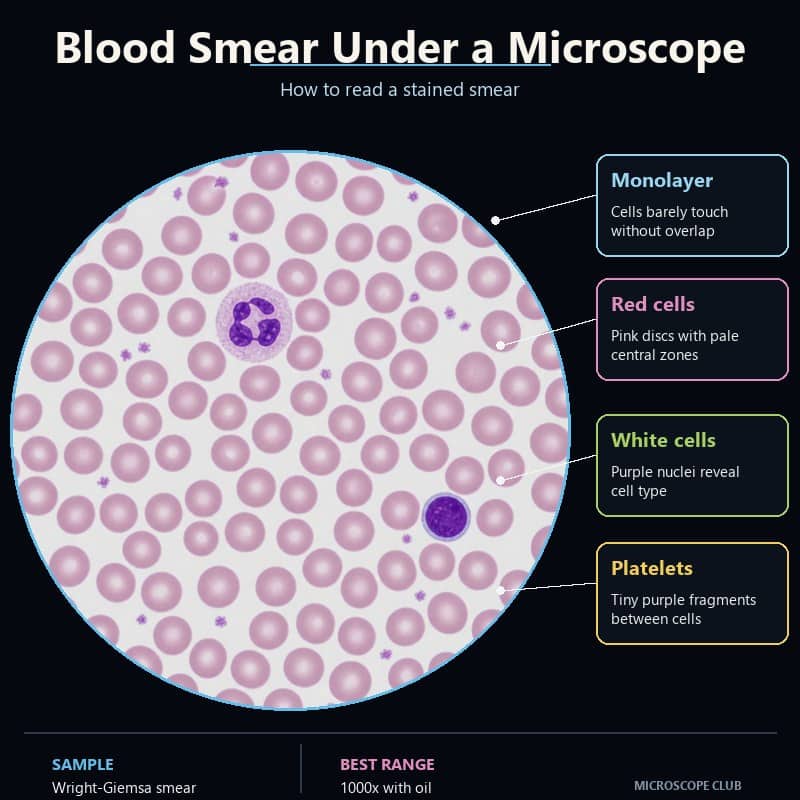
Stained blood smear under a microscope showing red blood cells, a neutrophil, a lymphocyte and platelets

A blood smear under a microscope shows three things at once: pale pink red cells scattered like coins, purple-stained white cells with wildly different shapes, and tiny lilac specks called platelets. To read one, you move the slide to the monolayer just behind the feathered edge, sweep from 10x up to 100x oil immersion, and …

Read more