Observing Cork Cells Under The Microscope
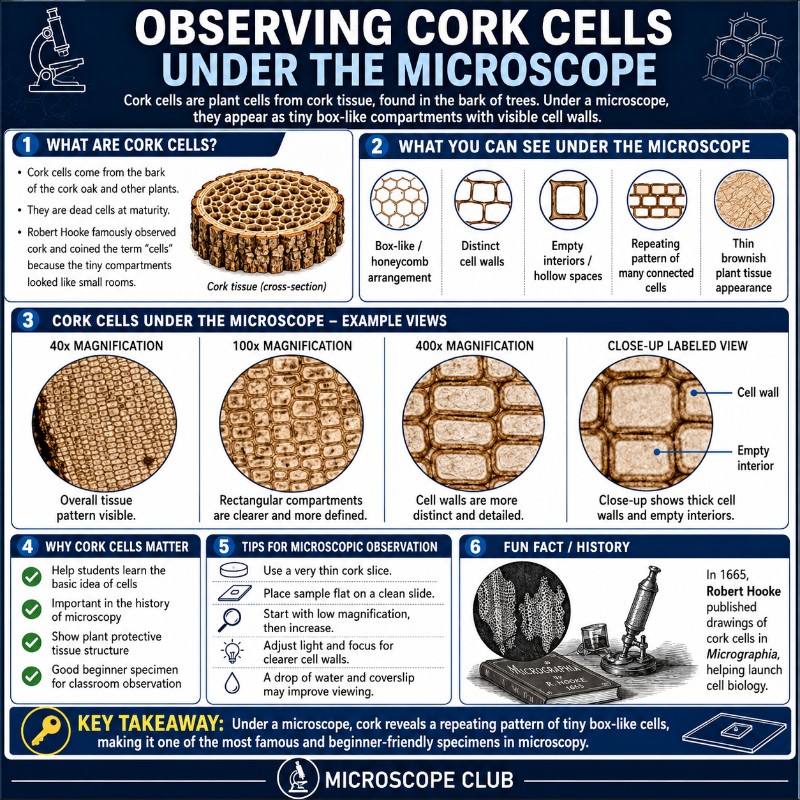
Photo of Observing Cork Cells Under The Microscope

Cork cells are the reason the word “cell” exists in biology at all. When Robert Hooke pressed a sliver of cork against his primitive microscope lens in 1665, he saw rows of empty, walled compartments so uniform they reminded him of the tiny rooms — cellae — in a monastery. He drew them, named them, …

Read more

Observing Cancer Cells Under The Microscope

One of the more useful and essential uses of microscopy is in identifying, analyzing, and treating certain diseases, ranging anywhere from bacterial and viral infections, to something a lot more serious and fatal, such as cancer. There are a lot of distinctive differences between cancer cells and normal cells when it comes to appearance, characteristics, …

Read more

Observing Ants Under The Microscope

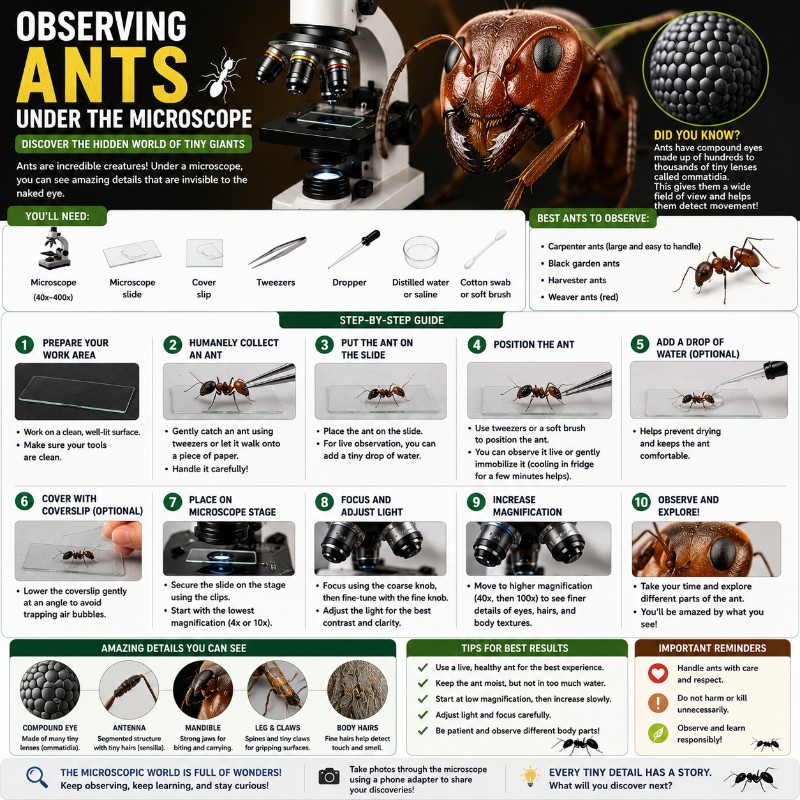
Ants reward every magnification step with something new — a whole body in motion at 10x, individual hairs and mandible teeth at 40x, and individual ommatidia in the compound eye at 400x on a prepared slide. Knowing what to expect at each level, and how to prepare your specimen correctly, is the difference between a …

Read more

Observing Salt Under The Microscope

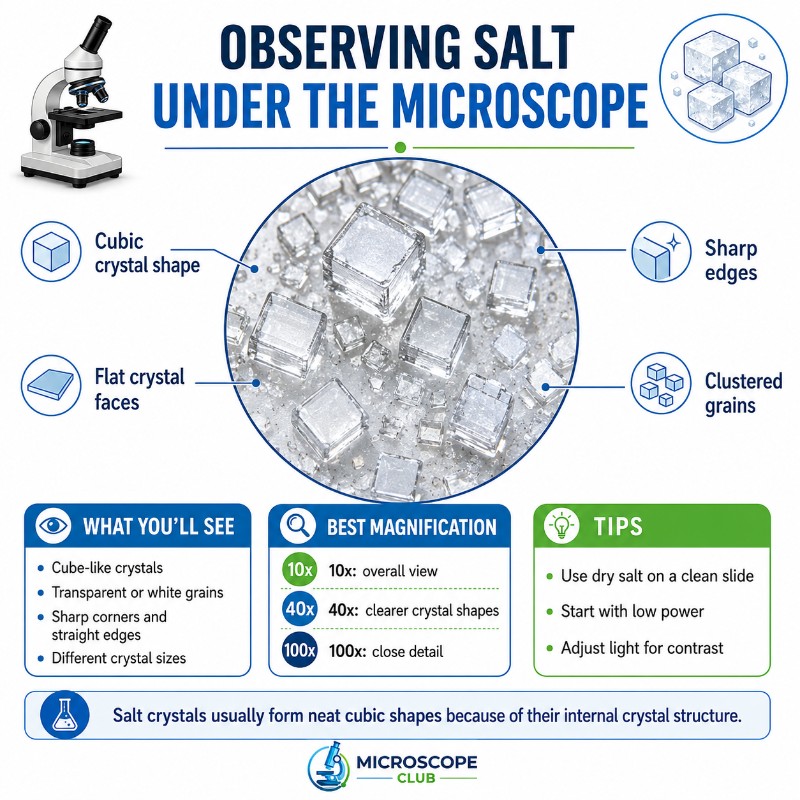
Salt under the microscope reveals something most people don’t expect: a perfectly geometric crystal, its flat faces and right-angle edges so precise they look machined rather than grown. The first time you focus on a recrystallized grain at 40x, the cubic shape is unmistakable — no soft curves, no randomness, just clean right angles repeating …

Read more

Observing Sand Under The Microscope

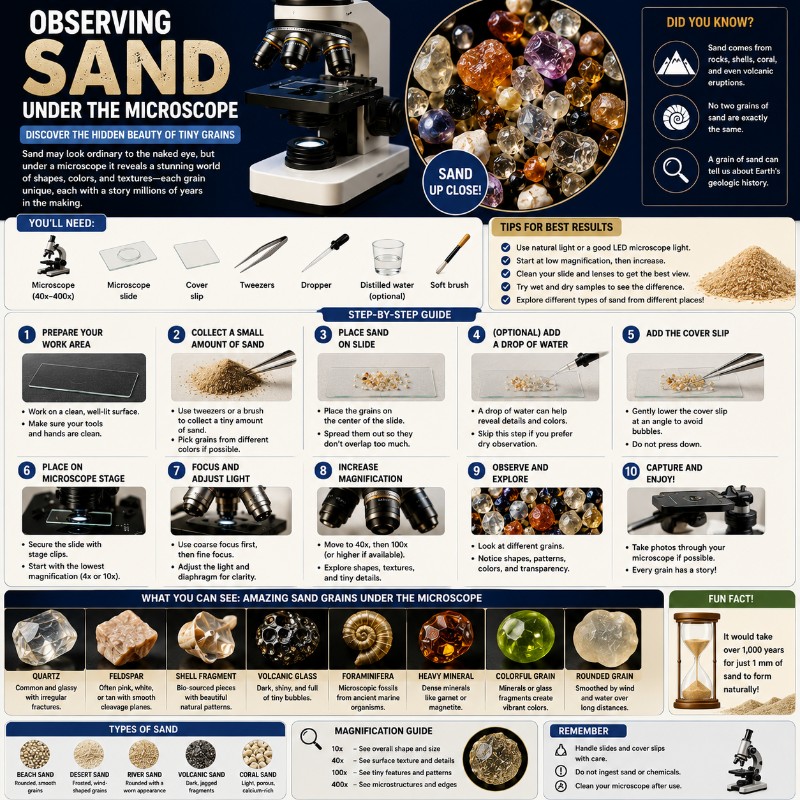
Sand grains under a microscope reveal more than most people expect — not just shape and color, but the entire travel history of a grain: whether it was hurled by desert winds, tumbled down a river, or built grain-by-grain from the skeletons of sea creatures. A $40 stereo scope and a pinch from your local …

Read more

Observing Yeast Under The Microscope

Observing Yeast Under The Microscope

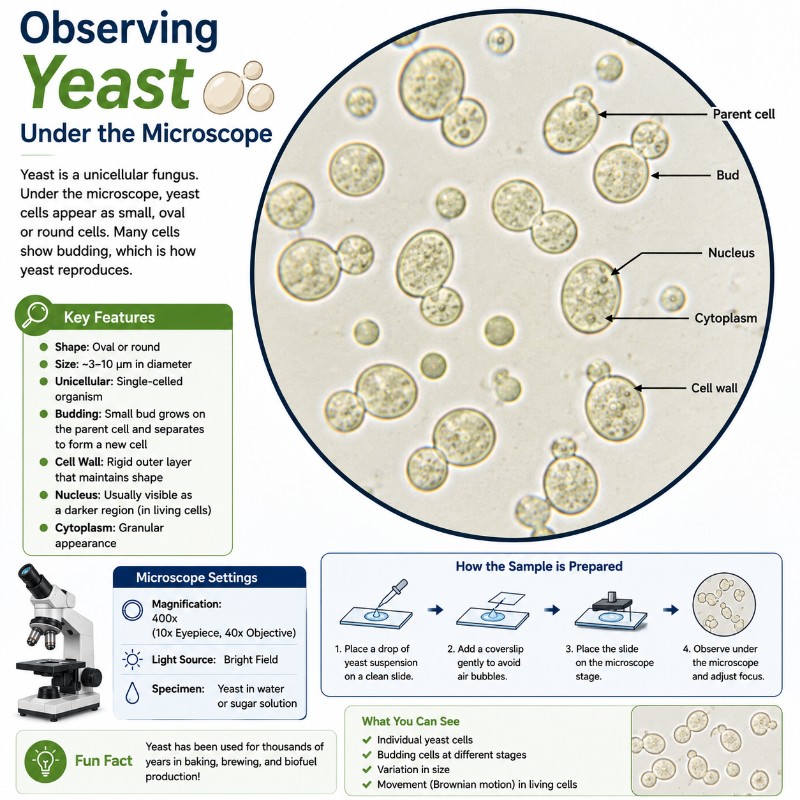
Yeast under a microscope reveals a world far more dynamic than the plain beige powder from a baking packet suggests. At 400x magnification you can watch living cells bud off daughter cells in real time — and a single drop of methylene blue tells you in seconds which cells are alive and which are dead. …

Read more

Can Viruses Be Seen With A Light Microscope?

Photo of Can Viruses Be Seen With A Light Microscope_

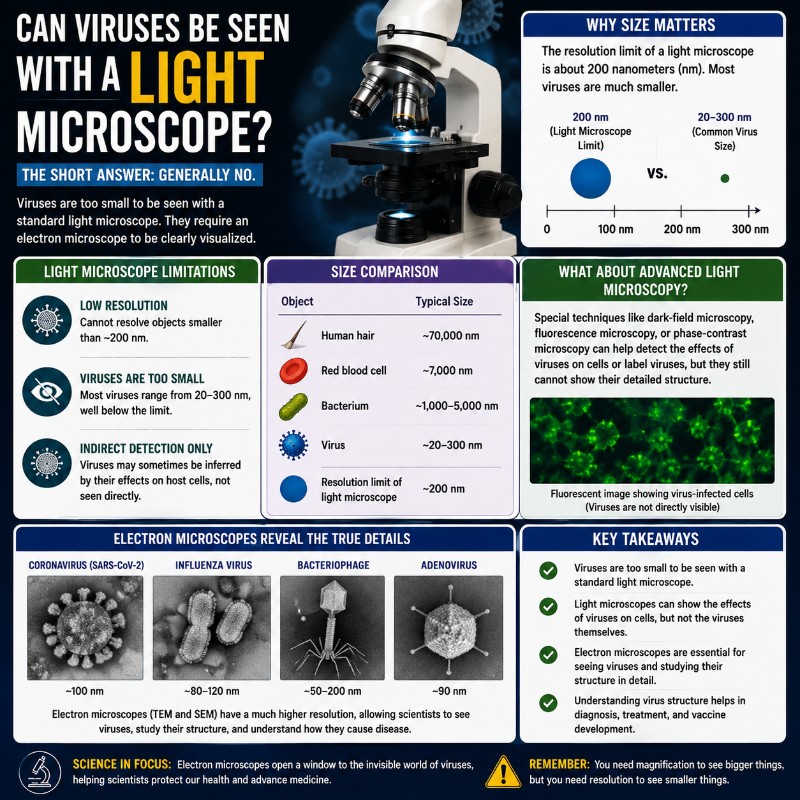
Viruses range from 20 to 300 nanometers in diameter, and a standard light microscope resolves no finer than about 200 nanometers — the Abbe diffraction limit — which means the optical microscope you find in a lab or school sits right at the edge of visibility for the very objects virologists most need to study. …

Read more