Microscope Resolution 101: The Numerical Aperture and Light Wavelength

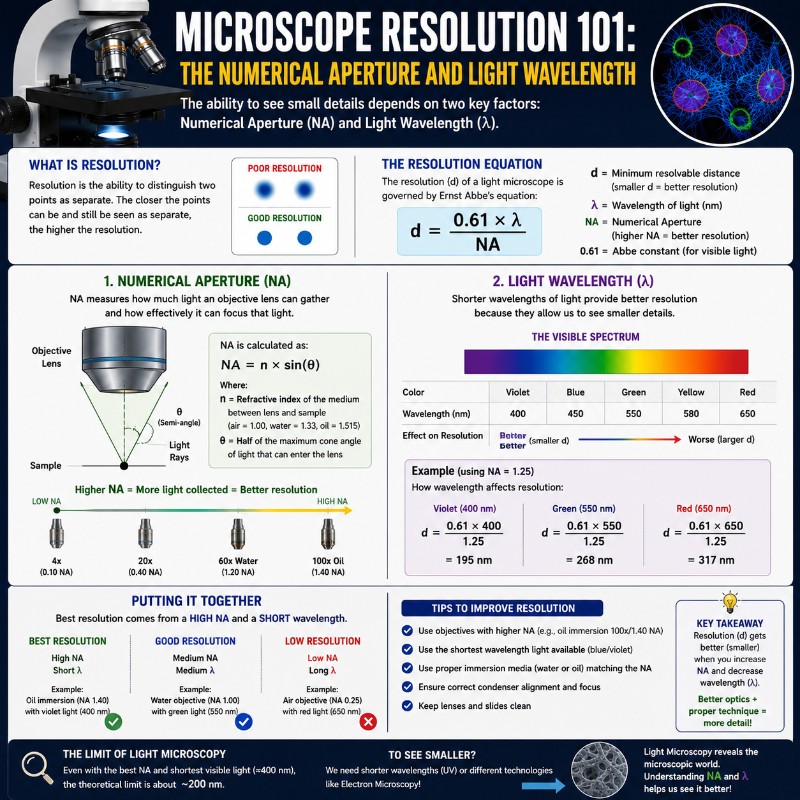
Microscope resolution — the ability to distinguish two closely spaced points as separate — is the true measure of what a microscope can actually reveal, and it is governed by physics, not by the magnification dial. Understanding it changes how you choose objectives, set up illumination, and interpret what you see on a slide. This …

Read more

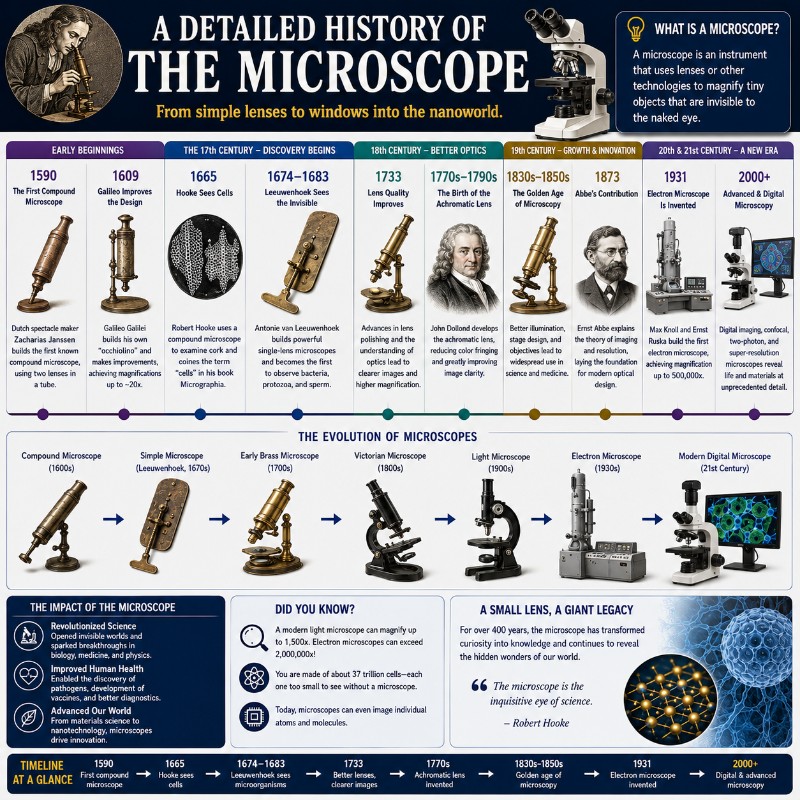
A Detailed History Of The Microscope

Photo of A Detailed History Of The Microscope

The history of the microscope is a 2,000-year relay race — passed from ancient glassworkers to Islamic scholars, Dutch lens-grinders, and 20th-century physicists pushing far beyond the limits of light itself. The microscope stands as one of the most consequential instruments in science, granting human eyes access to a world invisible to the naked eye, …

Read more

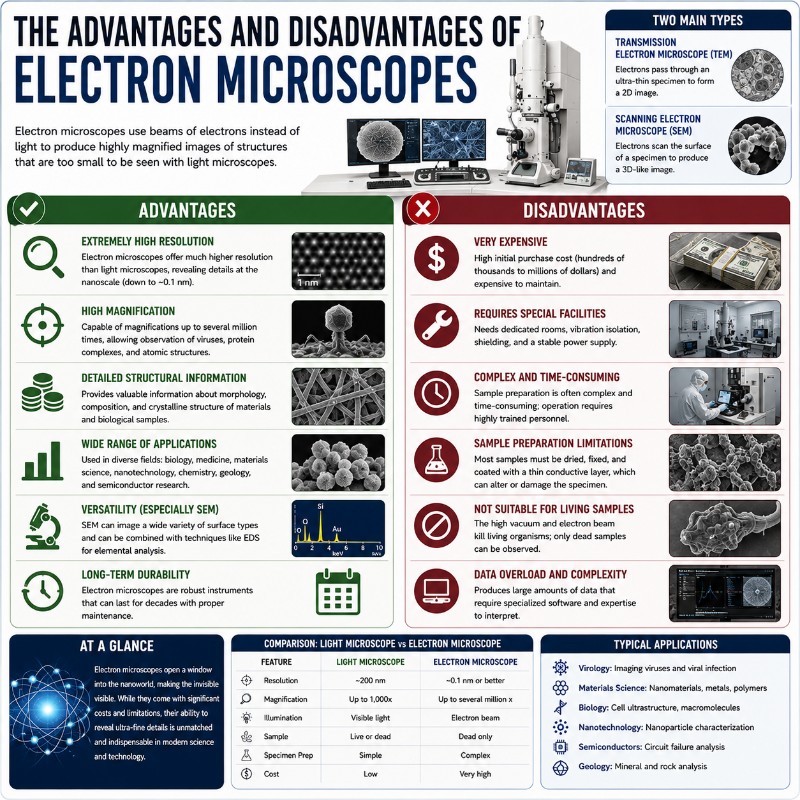
The Advantages and Disadvantages of Electron Microscopes

Photo of The Advantages and Disadvantages of Electron Microscopes

The electron microscope is the most powerful imaging tool ever routinely deployed in a laboratory — a device precise enough to resolve the space between neighboring atoms in a crystal lattice, or trace the folds of a protein no crystallographer has ever crystallized. The jump from a light microscope to an electron microscope isn’t incremental; …

Read more

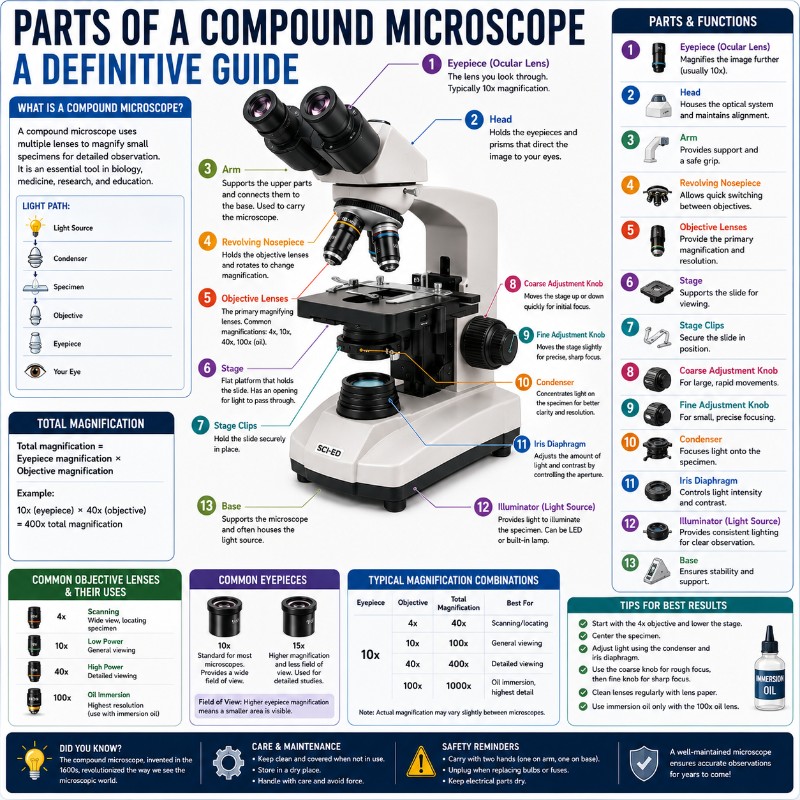
Parts of A Compound Microscope – A Definitive Guide

Photo of Parts of A Compound Microscope

Pick up a compound microscope for the first time and it can feel overwhelming — there are knobs on the side, a rotating turret at the bottom of the head, and a cluster of lenses you’re not sure whether to touch. Once you know what each part does and why it’s there, operating the scope …

Read more