AMSCOPE B120C Microscope Reviews: Your Ultimate Guide to Buying the Best Model [2023]

Photo of AMSCOPE B120C Microscope Reviews: Your Ultimate Guide to Buying the Best Model [2023]

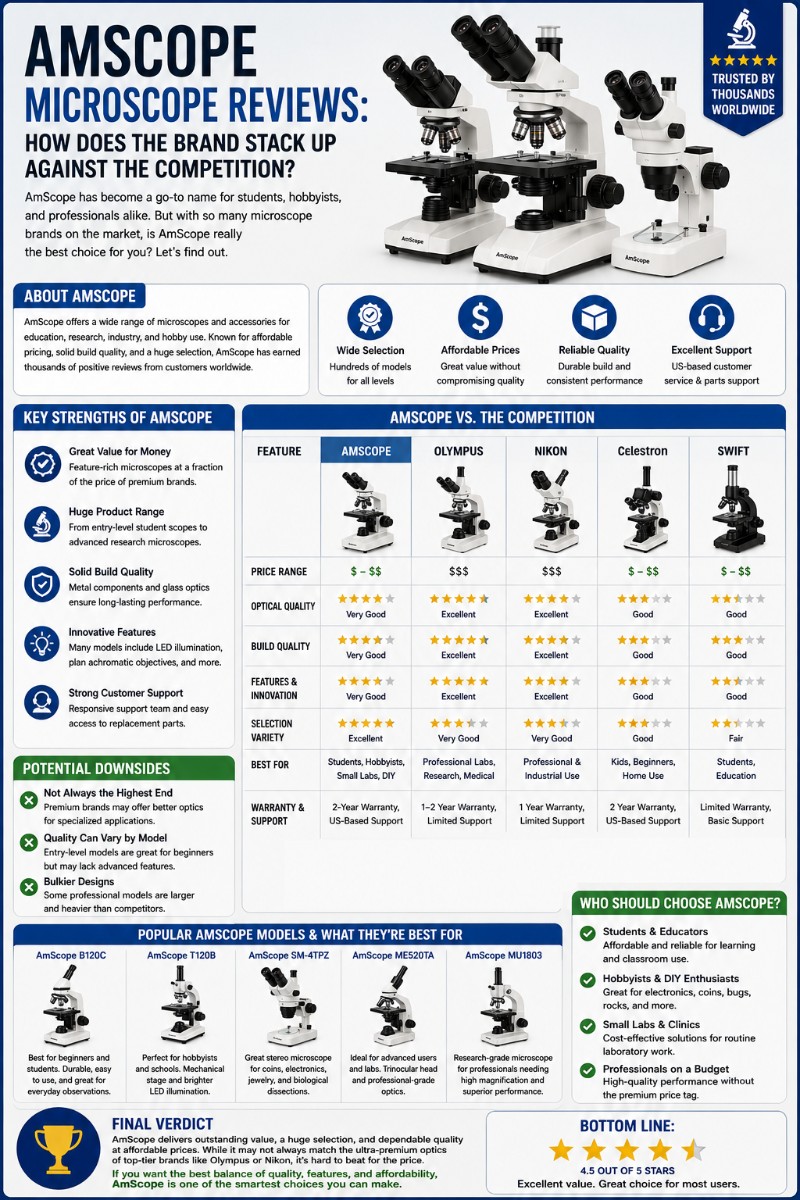
The AmScope B120C is a fantastic yet cost-effective microscope from the industry’s top maker. With its wide range of features and robust construction, the B120C is a top choice for professional researchers and casual hobbyists. With precision optical glass elements and a powerful 40x-1000x magnification range, the AmScope B120 offers superb clarity for examining anything …

Read more

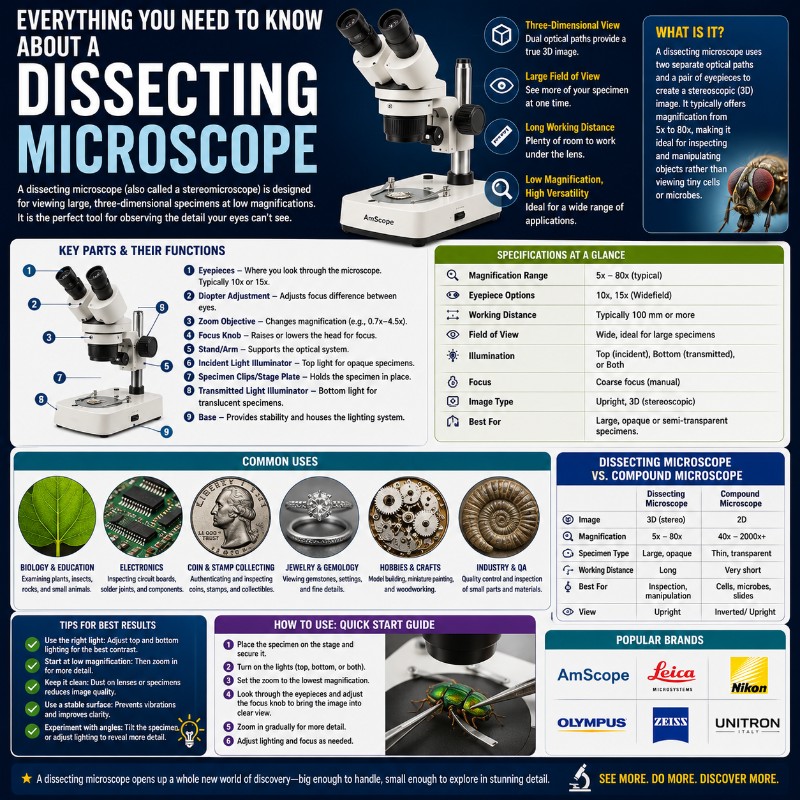
Everything You Need to Know About A Dissecting Microscope

Photo of Everything You Need to Know About A Dissecting Microscope

A dissecting microscope — also called a stereo microscope — gives you a true three-dimensional view of whole, opaque specimens at low magnification, making it the go-to tool for anyone who needs to work with their hands while looking through the eyepieces. Whether you’re pinning an insect, inspecting a solder joint, or grading a gemstone, …

Read more

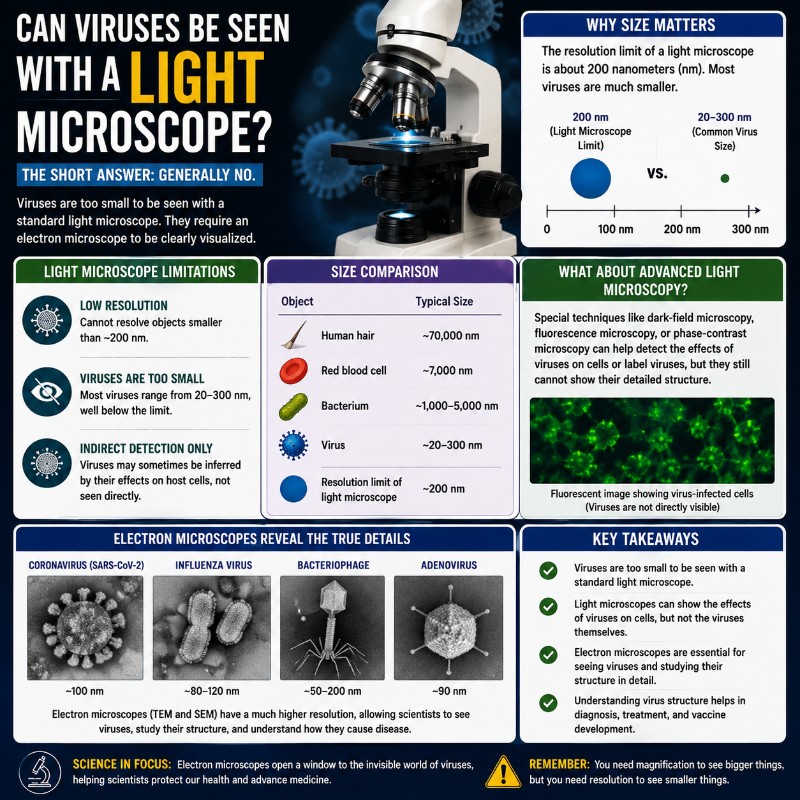
Can Viruses Be Seen With A Light Microscope?

Photo of Can Viruses Be Seen With A Light Microscope_

Viruses range from 20 to 300 nanometers in diameter, and a standard light microscope resolves no finer than about 200 nanometers — the Abbe diffraction limit — which means the optical microscope you find in a lab or school sits right at the edge of visibility for the very objects virologists most need to study. …

Read more

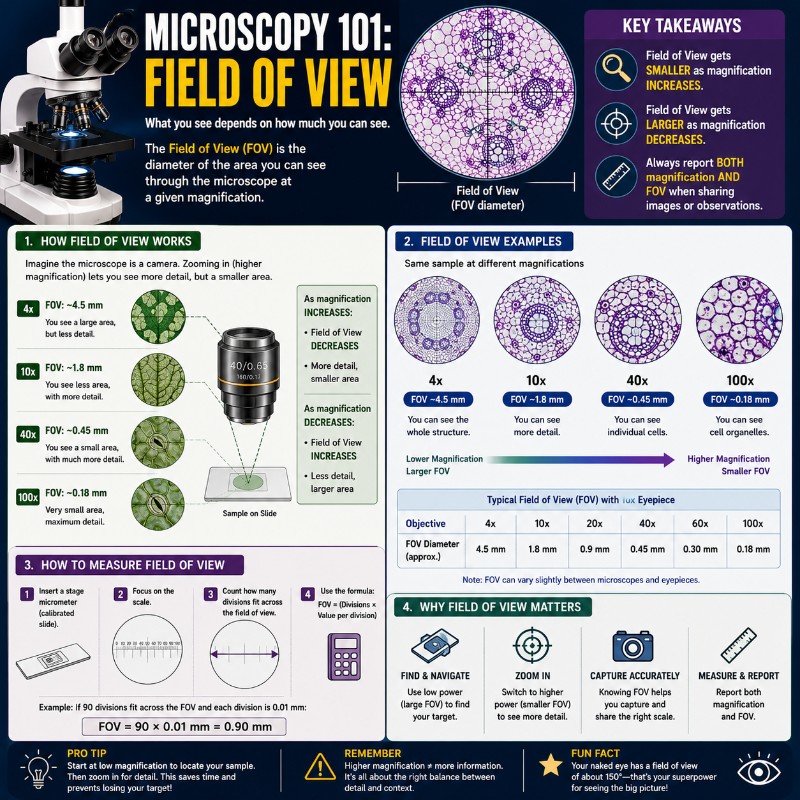
Microscopy 101: Field of View

Microscope field of view is the diameter — in millimeters or micrometers — of the circular specimen area you can actually see through the eyepiece at any given magnification. Get this number wrong and you’ll spend ten minutes hunting for a 0.55 mm object on a slide that you could have found in seconds by …

Read more

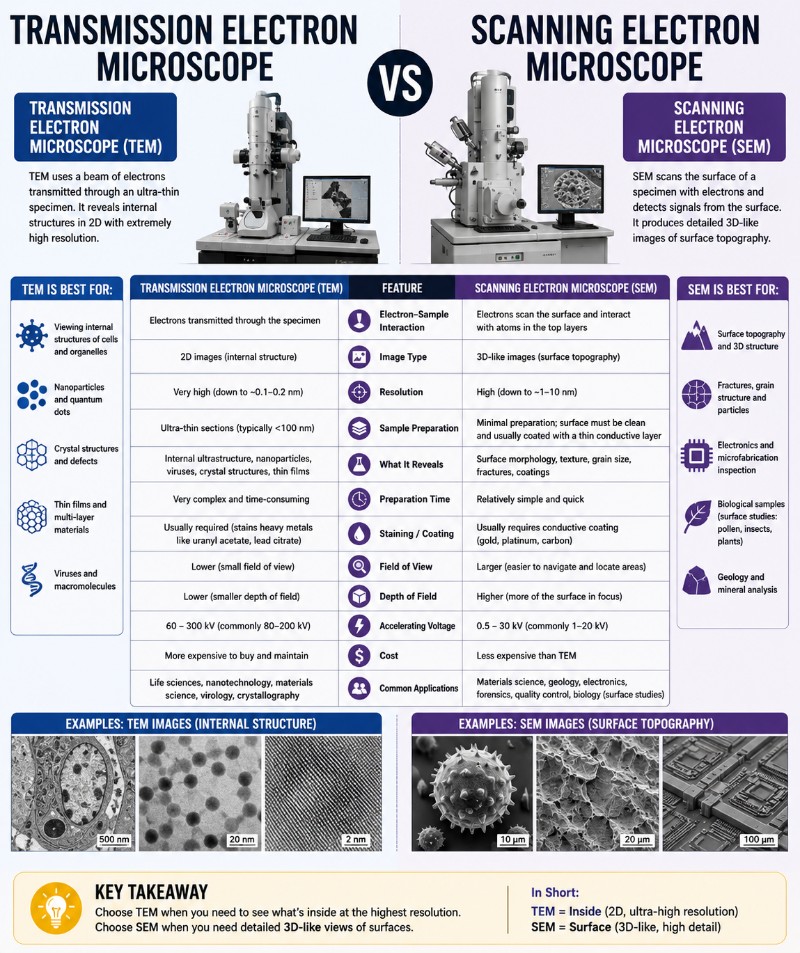
Transmission Electron Microscope vs Scanning Electron Microscope

Transmission electron microscopes and scanning electron microscopes both fire beams of electrons at a specimen — but one fires through it and the other scans across it, and that single difference determines almost everything else: what you can see, how you prepare the sample, and which instrument you reach for first. TEM vs SEM: quick …

Read more

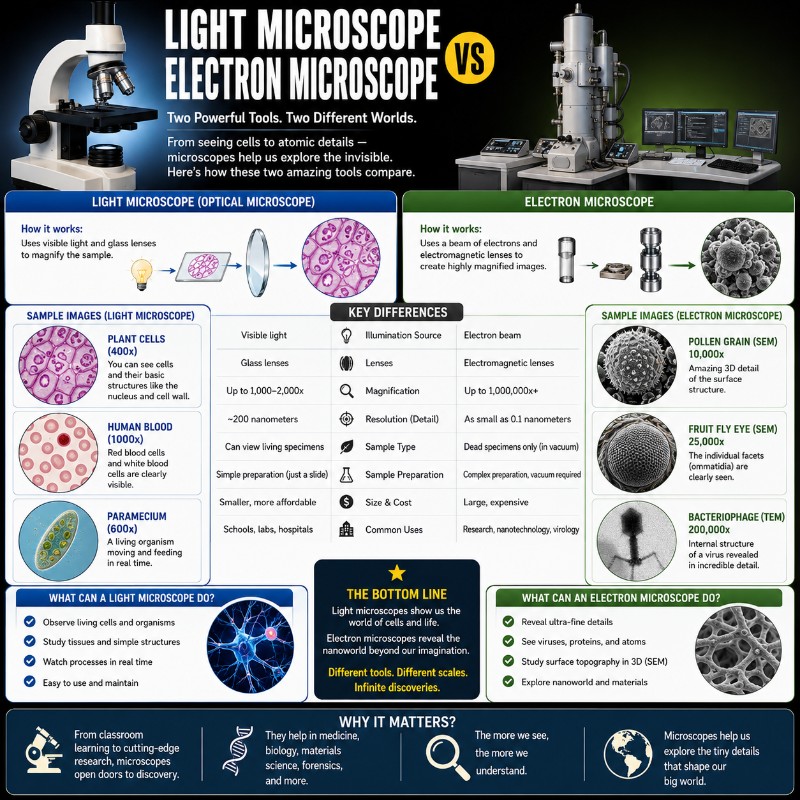
Light Microscope vs Electron Microscope

Light microscopes and electron microscopes are both designed to reveal what the naked eye cannot see — but they operate on entirely different physics, deliver very different images, and suit very different jobs. Understanding the gap between them is the first step to knowing which tool you actually need. Quick comparison: light microscope vs electron …

Read more

Microscope 101: Depth of Field vs Depth of Focus

Photo of Microscope 101: Depth of Field vs Depth of Focus

Depth of field in a microscope is the axial distance — measured along the optical axis — over which a specimen remains in acceptable focus without repositioning the objective or stage. At a 100x oil-immersion objective it can be as thin as 0.2 µm, which means a single bacterium can slip in and out of …

Read more

How Much Does An Electron Microscope Cost?

Photo of How Much Does An Electron Microscope Cost?

Electron microscope prices range from around $50,000 for a compact benchtop unit to well over $20 million for an aberration-corrected transmission electron microscope — and the instrument cost is only the beginning. Whether you are evaluating an in-house purchase for a materials lab, a university core facility, or a biomedical research group, understanding the full …

Read more

Simple Microscope: Definition, Principle, Parts, And Uses

Photo of Simple Microscope: Definition, Principle, Parts, And Uses

A simple microscope uses a single convex lens to produce a virtual, erect, and magnified image of an object — making it the most fundamental optical instrument in science and everyday life. From Antonie van Leeuwenhoek’s 17th-century single-lens devices that first revealed bacteria, to the jeweller’s loupe you hold at arm’s length today, the same …

Read more