
This BEBANG PM1000 review lands on a clear verdict: CONSIDER it as a genuinely fun, portable gadget for kids exploring bugs, fabric, and coins around the house — but the “1000X” and “4K” claims on the box are more marketing than measurement. At least one verified buyer confirms the real optical performance falls well short of both headline numbers, even though the device still pulls a strong 4.5-star average across nearly 2,000 ratings. If you go in expecting a genuine lab-grade instrument, you’ll be disappointed; if you go in expecting an affordable, rechargeable digital toy that gets kids looking closely at the world, it delivers.

✅ Pros
- Pocket-sized and lightweight at 0.34 lbs — easy for small hands to hold and carry
- Captures both photos and video so kids can save and share what they find
- Rechargeable battery runs up to 2.5 hours per charge, with the cable included
- Ships with a full lab-grade glass slide kit and an EVA carry case
- Strong overall track record — 4.5/5 average across roughly 2,000 ratings
❌ Cons
- A verified buyer reports the device doesn’t actually reach 1000X or true 4K resolution
- Included instructions are thin — expect some trial and error to get it set up
- Marketed from age 4, but one buyer found it too advanced for a 3.5-year-old
- Listing’s Q&A section is sparse, so pre-purchase questions are hard to research
What to Look for in a Handheld Digital Microscope for Kids
Magnification numbers on kids’ digital microscopes are routinely inflated, and the BEBANG PM1000 is a case in point: the listing advertises 1000X, but a verified buyer specifically reports the device doesn’t reach even 10X in practice, let alone the full claim. The number that actually matters for a handheld device like this is the real angle of view and objective lens type — here, a 24-degree field of view through an achromatic lens — not the marketing headline. Before buying any kids’ digital microscope, check whether the “X” figure is optical magnification or just digital zoom stretched across the sensor, since the two produce very different image quality.
Illumination matters just as much as magnification. The PM1000 uses an LED light source, which is standard for this device category and necessary for viewing opaque specimens like coins, fabric, or insects rather than translucent prepared slides. Battery life and portability are the other deciding factors for a device aimed at kids — a 3.7-volt rechargeable battery and a sub-half-pound body are reasonable baselines for something meant to survive a backpack. For a deeper look at how digital zoom claims compare to real optical performance on a similar handheld device, see our Bysameyee USB microscope review.
Finally, weigh what’s actually included versus what’s implied by the box art. The PM1000 comes with a 32GB SD card, USB-C charging cable, EVA case, neck strap, and a set of prepared glass slides — a genuinely complete starter kit for the price. That accessory bundle is often a better predictor of long-term satisfaction than the magnification number printed on the packaging.
Who Should Buy a Handheld Digital Microscope for Kids?
This category suits curious kids roughly 6 to 12 years old who want to poke around the backyard, look at insects and leaves, and capture what they see rather than commit to formal slide-based biology work. Parents and grandparents shopping for an affordable, low-stakes gift will find handheld digital microscopes like the PM1000 hit the right price point — well below premium digital microscopes aimed at hobbyists, and a step up from disposable toy-grade loupes.
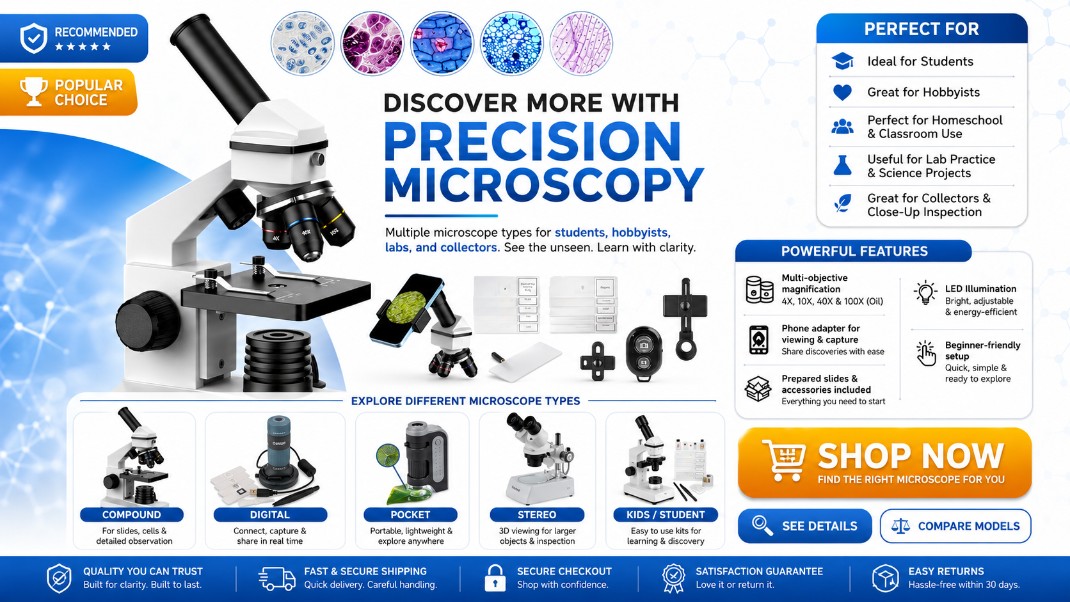
Homeschool families and educators who need slide-based, curriculum-aligned work are better served by a compound microscope rather than a handheld digital model — our AmScope M150C-I review covers a solid option built specifically for that use case. Handheld digital models like the PM1000 are the right call when the goal is casual exploration and photo/video capture, not structured lab science.
Who This Is For
The BEBANG PM1000 fits parents and grandparents buying a portable, rechargeable gift for a 6-to-12-year-old who wants to look at bugs, coins, and fabric up close and save the results as photos or video. It’s not the right pick for buyers who need genuine 1000X optical magnification or true 4K image quality, and it’s likely too fiddly for children under about 5.

Full Specifications
| Spec | Value |
|---|---|
| Light Source Type | LED |
| Real Angle Of View | 24 Degrees |
| Magnification Maximum | 1000 x |
| Voltage | 3.7 Volts |
| Compatible Devices | Personal Computer, Laptop, Smartphone |
| Objective Lens Description | Achromatic |
| Power Source | Battery Powered |
| Item Dimensions L x W x H | 7.6L x 4.6W x 10.2H centimetres |
| Item Weight | 32 Grams |
| Enclosure Material | EVA plastic |
| Color | black+orange |
| Model Name | PM1000 |
| Brand | BEBANG |
| Manufacturer Part Number | PM1000 |
| Built-In Media | 32G SD Card, Charging cable, User manual, EVA Case, Color box, Gift box, Neckstrap, Slides set with case |
Optical Performance and Magnification Accuracy
The BEBANG PM1000 advertises 200X-1000X magnification through a 5-level digital zoom range designed to cover everything from insects to fabric weave. The Real Angle Of View spec, listed at 24 degrees, is the more honest indicator of what you’ll actually see on the 2.0-inch screen at higher zoom levels, since a narrow angle of view combined with digital (rather than optical) zoom typically means image softness increases sharply as magnification climbs.
The BEBANG PM1000 draws a direct, credible challenge from a verified purchaser who states plainly: “This is not 1000x! it doesn’t reach 10X and also not 4k!” That single complaint matters more than its 2-star weighting suggests, because it targets the two specific numbers in the product title rather than a general quality gripe. For context on how magnification and resolution specs are actually measured on imaging instruments, the Molecular Expressions microscopy primer is a useful reference for understanding the difference between stated and effective magnification.
The BEBANG PM1000 achieves its imaging through an achromatic objective lens paired with an LED light source, a combination that’s standard for opaque-specimen viewing rather than translucent slide microscopy. Buyers who need this device to genuinely resolve fine detail at high zoom should temper expectations against the verified complaint above rather than the box copy alone.
Portability and Battery Life
The BEBANG PM1000 weighs just 0.34 lbs and measures 4 x 3 x 1.8 inches, small enough to fit in a child’s pocket or backpack pouch without adding noticeable bulk. That size, paired with the included thickened neck strap, is what one reviewer specifically credited when explaining why it worked better for outdoor nature study than bulkier alternatives they’d considered.
The BEBANG PM1000 runs on a 3.7-volt rechargeable battery rated for roughly 2.5 hours of continuous use per charge, with a USB-C cable included in the box rather than sold separately. For a device aimed at kids who lose patience quickly, not needing disposable batteries on hand is a meaningful convenience, though 2.5 hours will run out mid-session for longer outdoor excursions.
Slide Kit and Included Accessories
The BEBANG PM1000 ships with a full set of prepared, lab-grade glass slides and widened viewing slots designed to let slides pass through more smoothly than earlier versions of the same product line. One buyer specifically praised this detail, noting in a translated review that the included slides “look great” and that the device is “easy to calibrate” once the slide holder is removed for direct viewing.
The BEBANG PM1000 also bundles a 32GB microSD card, USB-C charging cable, EVA hard case, and printed user manual inside an outer gift box, which covers the practical basics of storage, charging, and protection without requiring a separate purchase. The tradeoff is documentation quality: multiple reviewers describe the manual as thin, meaning kids and parents should expect to learn the zoom and focus controls through experimentation rather than a clear walkthrough.
What Customers Say
The BEBANG PM1000 holds a 4.5 out of 5 average across roughly 1,997 ratings. Because Amazon’s review-scraping endpoint returned no full reviews at extraction time, this section is based on a small incidental sample of six reviews only — five 5-star and one 2-star, all verified purchases — so treat the sentiment split below as directional rather than a statistically complete picture.
In that sample, positive reviewers praised portability and ease of use (“it’s portable so he can study nature close up, is easy to operate”) and called it “good value for a mid level microscope.” The lone negative review, however, is specific and credible rather than vague: “This is not 1000x! it doesn’t reach 10X and also not 4k!” Given the small sample size, we rate the review-integrity risk here as MEDIUM — not because the reviews look manipulated (all six were verified purchases with varied phrasing), but because a specific spec-accuracy complaint sits alongside generic international praise, and a larger sample is needed to know how often that complaint recurs. For more on how to weigh review authenticity when specific complaints appear alongside high star averages, see the FTC’s endorsement guide FAQ.
Final Verdict
CONSIDER the BEBANG PM1000 if you’re buying a portable, rechargeable digital microscope as a gift for a 6-to-12-year-old who wants to explore backyard specimens and save photos and video — but go in knowing the “1000X” and “4K” numbers on the box don’t match a verified buyer’s real-world experience, so buy for the accessory kit and portability, not the headline spec.
Frequently Asked Questions
Is the BEBANG PM1000 really 1000X magnification?
Not according to a verified buyer, who reports the device doesn’t reach even 10X in practice, let alone 1000X. The listing’s 200X-1000X figure appears to combine optical and digital zoom rather than reflect true optical magnification, so treat the number as a marketing ceiling rather than a guaranteed result.
What age is the BEBANG PM1000 suitable for?
The listing markets it from age 4, but at least one buyer returned the unit for a 3.5-year-old, judging it too advanced for that age. Based on available feedback, kids around 6 and up are more likely to operate it independently and get consistent value from it.
Does the BEBANG PM1000 take photos and videos?
Yes. It captures both still images and video, which one reviewer specifically cited as a deciding factor over other options they considered, since it lets kids save and share what they find rather than only viewing it live on the screen.
How long does the battery last on a full charge?
The built-in rechargeable battery is rated for roughly 2.5 hours of continuous use per charge. A USB-C charging cable is included in the box, so no separate cable purchase is needed.
What’s included in the box?
The package includes the digital microscope, a 32GB microSD card, a USB-C charging cable, a thickened neck strap, a printed user manual, and a set of prepared lab-grade glass slides with an EVA hard case for storage.
Does it connect to a smartphone or computer?
Yes, the spec sheet lists compatibility with personal computers, laptops, and smartphones, which allows footage and images captured on the microscope to be transferred and viewed on a larger screen.
Is the BEBANG PM1000 good for serious scientific specimen work?
No. It’s built as an entry-level, kid-focused exploration tool for casual viewing of insects, plants, coins, and fabric, not a lab-grade instrument. Buyers who need accurate high-magnification optical work or coursework-grade results should look at a compound microscope instead.
Conclusion
The BEBANG PM1000 works well as exactly what most buyers seem to be using it for: a portable, rechargeable gift that gets a 6-to-12-year-old looking closely at the world and saving what they find. It’s not the instrument to buy if you’re relying on the “1000X” or “4K” numbers on the box, since a verified buyer specifically disputes both — but the accessory kit, battery life, and pocket-sized build hold up on their own merits.
If you’ve used the BEBANG PM1000 or a similar handheld digital microscope with your own kids, we’d like to hear how the real magnification compared to the listing — drop a comment below. For buyers weighing a step up to a slide-based instrument instead, our guide on the PalliPartners 2000X covers another budget option with a similar inflated-claims pattern worth knowing before you buy.
Originally posted 2026-08-01 09:00:00.